
 By
By 
In today’s competitive environment, businesses can no longer rely solely on intuition or past experiences when making strategic decisions. Organizations across industries are embracing data-driven decision making (DDDM) to improve efficiency, reduce risk, and strengthen long-term performance strategies.
With the rapid growth of digital tools, cloud platforms, and analytics technologies, companies now have access to enormous volumes of information. When properly analyzed, this data becomes a powerful asset that helps leaders make accurate, timely, and measurable decisions.
This shift toward data-driven operations is transforming how businesses evaluate performance, design strategies, and maintain a competitive advantage in modern markets.
What Is Data-Driven Decision Making?
Data-driven decision making refers to the practice of using data analysis, statistical insights, and measurable evidence to guide business strategies and operational choices.
Instead of relying on assumptions, organizations analyze information collected from sources such as:
- Customer interactions
- Market trends
- Sales performance
- Operational processes
- Website and digital analytics
- Financial reports
By interpreting these insights, companies can identify patterns, forecast outcomes, and implement strategies with greater confidence.
Why Modern Businesses Depend on Data
In the digital economy, data has become one of the most valuable business resources. Organizations that effectively use data are better positioned to adapt to changing customer needs and industry trends.
Key reasons companies rely on data include:
Improved Strategic Planning
Data provides a clear picture of business performance, allowing leaders to develop realistic strategies based on measurable outcomes.
Faster and More Accurate Decisions
Real-time analytics allow organizations to respond quickly to opportunities and risks, reducing delays in decision-making processes.
Enhanced Customer Understanding
By analyzing customer behavior, businesses gain insights into preferences, purchasing patterns, and expectations, enabling personalized experiences.
Competitive Advantage
Companies that leverage data effectively can anticipate market shifts, innovate faster, and outperform competitors.
How Data-Driven Strategies Improve Business Performance
When integrated into business processes, data-driven approaches significantly enhance organizational performance.
1. Optimizing Operational Efficiency
Data analysis helps organizations identify inefficiencies in their operations. By examining production, logistics, or workflow metrics, companies can streamline processes and reduce unnecessary costs.
Benefits include:
- Reduced operational waste
- Improved resource allocation
- Faster process execution
- Better productivity management
2. Strengthening Financial Performance
Financial analytics enables businesses to track revenue streams, profit margins, and cost structures more effectively.
Companies can use data to:
- Forecast future revenue trends
- Identify profitable products or services
- Reduce financial risks
- Improve budgeting accuracy
3. Enhancing Marketing Effectiveness
Modern marketing strategies rely heavily on data analytics and customer insights.
Through marketing data, organizations can:
- Target the right audience segments
- Optimize advertising campaigns
- Measure campaign performance
- Improve return on investment (ROI)
For example, analyzing website behavior helps marketers understand which content attracts users and what drives conversions.
4. Improving Customer Experience
Customer experience is a major factor influencing business success. Data allows companies to understand customer expectations and deliver personalized solutions.
Businesses use customer data to:
- Recommend relevant products
- Predict future purchasing behavior
- Resolve issues quickly
- Improve customer retention
This leads to stronger relationships and higher customer satisfaction.
5. Enabling Predictive Decision Making
One of the most powerful benefits of data analytics is predictive capability. Using advanced models and historical data, organizations can forecast trends and prepare for future changes.
Predictive insights help businesses:
- Anticipate market demand
- Manage inventory efficiently
- Reduce supply chain disruptions
- Plan long-term growth strategies
Technologies Powering Data-Driven Businesses
Several modern technologies support data-driven decision making and business intelligence.
Big Data Platforms
Big data systems allow organizations to process large and complex datasets from multiple sources.
Business Intelligence (BI) Tools
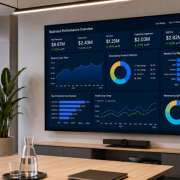
BI platforms convert raw data into visual dashboards, reports, and insights that leaders can easily interpret.
Artificial Intelligence and Machine Learning
AI and machine learning help businesses analyze patterns, automate processes, and generate predictive insights.
Cloud Computing
Cloud platforms provide scalable infrastructure that enables companies to store and analyze massive volumes of data efficiently.
Challenges in Implementing Data-Driven Strategies
While the advantages of data-driven decision making are clear, many organizations face challenges when adopting these strategies.
Common obstacles include:
- Data quality issues caused by incomplete or inaccurate information
- Lack of skilled data analysts and technical expertise
- Integration difficulties across multiple data systems
- Data security and privacy concerns
- Resistance to change within organizational culture
To overcome these challenges, companies must invest in data governance, employee training, and reliable analytics tools.
Best Practices for Successful Data-Driven Decision Making
Organizations that succeed with data-driven strategies typically follow several best practices.
Establish Clear Data Objectives
Define what the organization wants to achieve through data analysis, such as improving sales performance or enhancing customer satisfaction.
Invest in the Right Technology
Adopt modern analytics tools, cloud systems, and visualization platforms that support scalable data processing.
Promote a Data-Centric Culture
Encourage employees across departments to rely on data insights rather than assumptions when making decisions.
Ensure Data Quality and Governance
Implement policies that maintain data accuracy, consistency, and security across all systems.
Train Employees in Data Literacy
Providing training helps employees understand how to interpret data and apply insights effectively.
The Future of Data-Driven Business Strategies
As digital transformation accelerates, data will continue to play a central role in shaping business strategies. Emerging technologies such as advanced analytics, artificial intelligence, and real-time data processing will further enhance decision-making capabilities.
Organizations that successfully integrate these technologies will gain deeper insights into their operations, customers, and markets. This will allow them to develop smarter strategies, improve efficiency, and achieve sustainable growth.
Ultimately, businesses that prioritize data-driven decision making will be better prepared to navigate uncertainty and remain competitive in an increasingly complex marketplace.
FAQs
1. What is the main purpose of data-driven decision making in business?
The main purpose is to use data insights and analytics to guide business strategies, reduce uncertainty, and improve decision accuracy.
2. How does data-driven decision making improve business performance?
It improves performance by optimizing operations, enhancing marketing strategies, improving customer experiences, and enabling better financial planning.
3. What types of data are used in data-driven business strategies?
Businesses use multiple data sources, including customer data, sales data, operational metrics, financial reports, and market research.
4. What tools help organizations implement data-driven decision making?
Common tools include business intelligence platforms, analytics software, cloud computing systems, and artificial intelligence technologies.
5. Can small businesses benefit from data-driven strategies?
Yes. Even small businesses can use basic analytics tools, customer insights, and performance metrics to make more informed decisions and improve growth.
6. What challenges do companies face when adopting data-driven approaches?
Major challenges include data quality issues, lack of skilled analysts, technology integration problems, and data privacy concerns.
7. How can organizations build a data-driven culture?
Organizations can promote a data-driven culture by training employees, investing in analytics tools, encouraging evidence-based decisions, and maintaining strong data governance practices.










Comments